Showing posts with label alpacas. Show all posts

Saturday, August 31, 2013

Back to Business

We're back! I feel like we've been on hiatus for the past year or so. Leaving the corporate world 2 years ago was my dream come true. I'd have time to build my dog training business, take care of the farm, get my house in order, and have time to spin my ever-growing supply of alpaca fleece.

The only thing that's truly been accomplished during that time was growing the dog business, for which I'm very grateful. My house is more a mess than ever, the guys have been taking care of the farm, and my spinning wheel was gathering dust.

In addition to that, our application for an agricultural land use exemption, which would have reduced our property taxes, was denied. Although this wasn't the main reason we keep alpacas, it's a huge cost saver at tax time. Texas doesn't have a state income tax. They get homeowners instead with a huge property tax, compounded by the city and local school system. The denial of the ag exemption was pretty discouraging and we were ready to disperse most of the herd to save money.

In a last ditch effort, we went through the appeal process in front of a local review board. We presented our case and to our surprise, we won! We are the only property on our road to have an ag exemption.

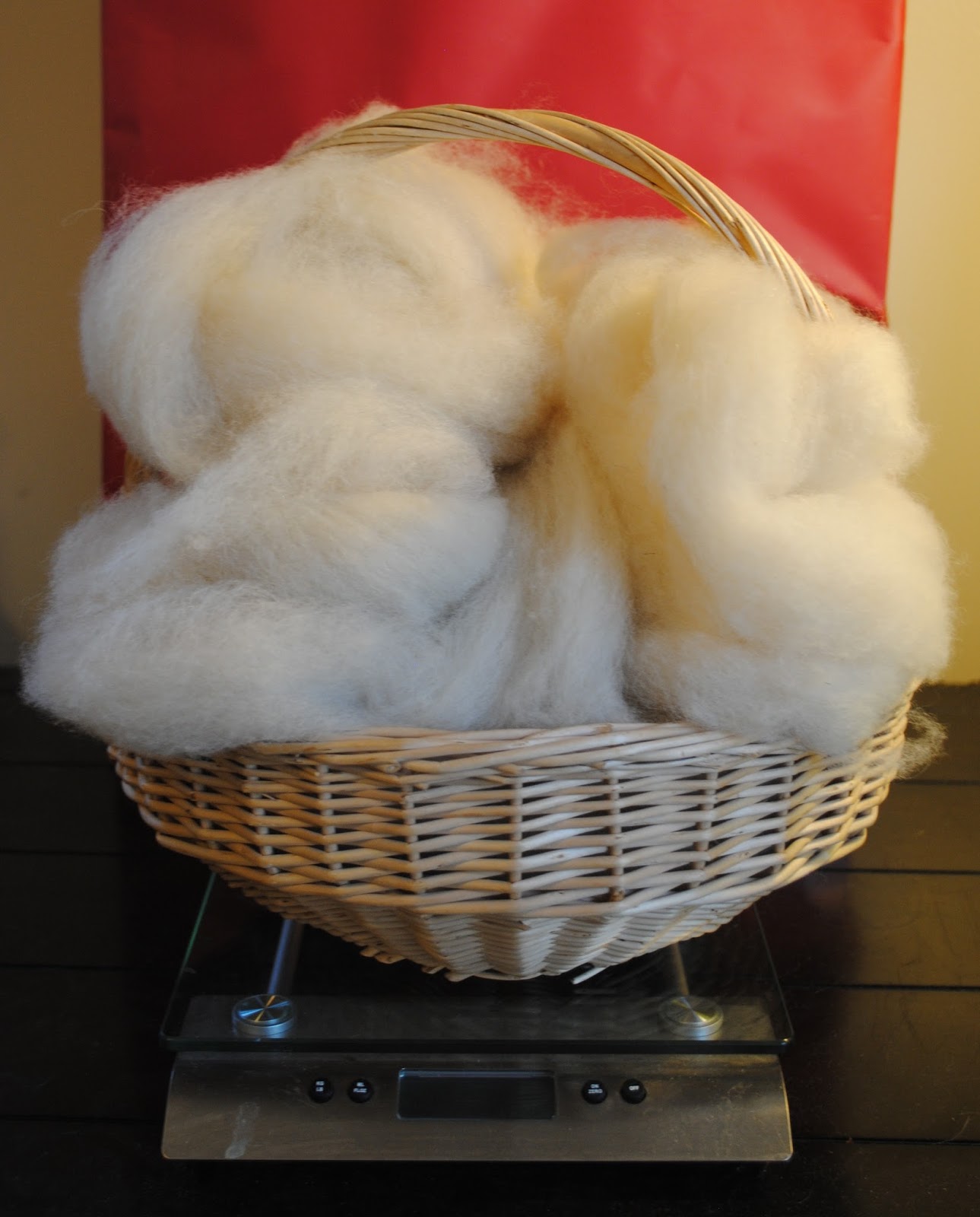
Along with that good news, I've found a wonderful person to help out around the office and farm. The combination of these 2 things has really energized me to start focusing on the potential of the farm business. We are moving fleece through the process of cleaning, carding and preparing for either spinning or making other products for sale. I've re-opened the Etsy shop and have alpaca items for sale here at the office when visitors come for tours.  Here are just a few of the things we've been working on:

Dryer balls

Roving for spinning or felting

Nesting fleece for birds
If you have a Cub scout pack, homeschool group, or just want to bring the family out to see the critters, drop us an email!  We'll get you scheduled and hope for cool weather.

Monday, June 20, 2011

Learning to Felt

My favorite thing to do with alpaca fleece is to spin it.  However, not all the fiber that comes off the animal is suitable for spinning, so I'm always looking for ways to use the "seconds".   Felting fibers is very popular right now and I've sold fleece to crafters for this purpose.  I've seen people make purses, hats and even slippers by felting.

I thought I'd teach myself to felt by doing something pretty easy to start with.  I have to admit that although I've seen dryer balls in the stores, I've never been tempted to buy a plastic or PVC ball made in China to bang around in my dryer.   Dryer balls are replacements for liquid fabric softener and dryer sheets.   The action of the ball in the dryer reduces drying time and naturally softens fabric and reduces cling.

I recently came across wool dryer balls which intrigued me.  If a plastic dryer ball can reduce drying time, imagine how much more moisture could be absorbed by a fiber ball.    An alpaca dryer ball with no dyes would also be hypoallergenic and so much safer than something made of PVC.

As every spinner has, I have a stash of leftovers - small balls of singles and leftover plied yarns that aren't enough to make a complete project, but too much to throw away -  along with some badly spun yarn made when I was just learning.  So, I gathered my baskets filled with the yarn remnants and started winding.  I had enough leftovers to wind 3 balls that measure about 9" around.  Then I put the ball in a tube sock and tied each end off with acrylic yarn that doesn't felt.


I ran each through the washer in hot water with a regular load of clothes.   Then into the dryer for at least 2 cycles of high heat. 


The yellow ball at the top left is pre-washing (you can still see the strands of yarn) and the other 2 are finished.   The yellow balls contain a mixture of alpaca and merino wool which was dyed.  This is some of the fiber I learned to spin on that I had stashed, but wasn't worth knitting with.  The brown ball is pure alpaca and this is what I'll continue to make my dryer balls with so there will be no chemicals or dyes in the process. 

Ideally, I'd like to make the balls directly from roving or even washed fiber.  That will be my next experiment. 

These dryer balls are great for drying diapers, too.  Smaller balls can also be cat toys and I'll trying to make those as well.  Stay tuned for 100% alpaca dryer balls and toys for the kitties coming soon!

Friday, June 17, 2011

Yes, it's hot enough for me, thank you

It's hot in Texas.  Very hot.  Excruciatingly hot for the past few weeks.  The heat index is around 105.  A month ago we were complaining about the constant wind.  Now we hope for the wind to cool it down a bit.

Everything in the books say that alpacas can withstand the heat up to a heat index of 120.   All of our new animals were shorn the first weekend in June, just after the heat wave started.  A few days after shearing, Lightening, one of our new grey boys was spending a lot of time just laying flat out in the sun.  We have shady areas where most of the animals took cover, but Lightening insisted on sunbathing.  His respiration was rapid and shallow.  He was on his way to heatstroke.   I had to go out every couple of hours and get him up and moving and get him cooled down.  I truly thought we might lose him, but he survived.

An alpaca's cooling system is on the surface of their belly, armpits and groin area.  Chet put a sprinkler in the pasture so they can cool themselves as needed.

Nothing like playing in the sprinkler on a hot day.  Lightening is front and center!

On the other side of the fence, mamas and babies come to get cooled off with a belly squirt from the hose. 

Mama Stephanie and baby girl.

And once they get their bellies wet, they cush to keep the cooling effect as long as possible.

A little boy in the dirt, imagine that!

Tuesday, May 17, 2011

No longer just a fiber farm

Up until this weekend, our alpaca herd has been entirely male and most of the boys have been gelded.  This is typically what makes up a true fiber farm.  No girls around to complicate life for the boys.  Some say that gelded males have the nicest fleece because all the animal's energy goes into making fiber instead of testosterone. 

We found someone selling some grey boys, and one of them was rose grey - a color I've been wanting to add to the herd.   These folks also had some females with young babies.  Chet's been talking about getting some girls to diversify our options and possibly do some breeding and selling animals.  Truthfully, I wasn't all that interested in adding to the alpaca population.  Maybe it's my background in dog rescue; maybe I'm really like Prissy in Gone with the Wind, "I don't know nothin bout birthin babies" or even taking care of young crias.  I've read horror stories on mail lists about difficult births, crias dying, having to bottle feed and the troubles that can cause.

The girls for sale were from excellent bloodlines, one and two generations removed from the original Peruvian and Chilean imports with big names.  The girls were brown, but the babies were white, which is another color I don't have enough of.  The package price for the 2 girls with crias and 2 grey boys was outstanding and we decided that if we were ever going to get some females that we couldn't pass up this chance. 

I've been in research mode for the last few days reading about cria care (the baby girl is 10 weeks old, the boy is just 8 weeks old), weaning, breeding and birthing.  Once we get new animals sheared, we'll doing some breeding really soon.   An alpaca's gestation period is a minimum of 335 days (about 11.5 months) and you don't want babies born in the heat and humidity of the summer or the worst cold of the winter.  (See what I've learned already!)

Having these new animals means that the boys have to be kept separate from the girls and crias, and the new boys have to be separated for a while from the resident boys.  Good thing Chet built out nicely divided pastures.  I think he was planning for this all along!


Bonacella and baby boy, standing; Stephanie and baby girl cushed

The grey boys are gorgeous!  They are actually half-brothers, having the same dam.  I can't wait to get my hands on these fleeces.


Rusty (rose grey) and Lightning (silver grey)


Monday, September 6, 2010

Growing and Dying

It's been a hot, humid spring and summer here - my first in Texas.  After living 9 years in Tucson with little to no humidity for 10 months out of the year, I've been extremely uncomfortable since around May.  It's only started to let up in the last few days and actually been nice to be outside.

The alpacas had been enduring the heat as well.  They got their bellies squirted every afternoon and played in the sprinkler in the pasture.  Their fleece actually acts as an insulator from the extreme heat, but they enjoy the coolness of the water on their bare undersides.

Two of the boys we got from the LSU vet school in March, Excalibur and Durango, were extremely thin and never gained much weight over the summer.  These guys were part of a research study looking at the effects of anesthesia on alpacas.  They were put under anesthesia every couple days for about 6 months.  They were kept in stalls and not allowed to graze at all.  I'm sure the stress level was pretty high.  We lost them both in the last 2 days.  Durango was our oldest boy - 12 years old - and a real sweetie.  He loved to eat and wasn't shy about trying to get whatever you had in your hand.  He was a fun personality.  Excalibur was a little more shy.  He never really warmed up to us, but would take food if you offered it.  He was 5 years old and a cute little boy.


Durango
Excalibur

We're not certain what caused both of these boys to die within a day of each other, but we're keeping a close eye on the rest of the herd.  All the others are a much better weight and aren't showing any signs of illness. 

We only lost one chicken this summer, but the heat has caused them all to slow down on the egg production.  We're trying again to hatch some eggs, but this time in an incubator.  Our last couple attempts using the broody hen didn't go well.  We're hoping to have some nice young laying hens for the winter.


Chet's garden grew really well this year.  We're getting peppers galore right now and beans are starting to come up again.  The surprise crop of the year is cotton.  Chet planted it for fun to see what would happen and he got a bumper crop.  He's been picking it and pulling out the seeds so I can prep it to spin.  Spinning cotton is pretty tricky, I guess, so I'll be learning something new.

Thursday, August 26, 2010

My First Commissioned Piece

I only started spinning last summer just after we got our alpacas and picked up knitting not long after that.  My Grandma Stacey taught me to knit when I was young and I never really forgot, but hadn't done it for many years.  I was determined that if we were going to have alpacas I would learn to do something with their wonderfully soft fleece.

A friend asked me to make a couple of scarves for Christmas presents and I've been thrilled to be able to do this.  We have one gray alpaca - Dude.  He's not the cutest boy in the herd, but I love his coloring.


I finished the first scarf yesterday.  It's the "Misti Chunky Ribs & Ruffles Scarf" pattern.  You can find it free on the internet.  It's a very feminine scarf with pretty ruffles at the edges.  I used size 9 needles and made it according the pattern otherwise.  It came out 3" wide and 81" long.  There's so many cool things you can do with long skinny scarves.  I need to find a mannequin, cause I'm sure not modeling anything!

I'm taking more orders for Christmas, so if you're interested, let me know:  FleeceFurandFeathers@gmail.com.  The gray is all gone now, but I can make any other color or blending of colors that we have in the pasture.  Or if you'd like to do it  yourself, I can provide the yarn.

Wednesday, June 9, 2010

Critter Update

Our second attempt to hatch eggs under a hen failed as well.  We tried with a different brooding hen, a small Silkie-x, who was a fierce protector of her clutch.  She went for days without getting off the nest to eat or drink.  The problem came when she pooped on the eggs.  They were all covered with poo and were disgusting; too nasty to even try to clean up.  So, no baby chicks this year.


We had 2 of our 3 Silkie girls brooding and when they brood, they don't lay eggs, so aren't contributing to their room and board costs.  We put them on Craig's list and they went home with a guy looking for female companionship for his Silkie rooster.  We went and got 6 new Americaunas (Easter eggers) who lay the green and blue eggs.  They've been great layers so far.  So, the henhouse is full again, but it's been so hot production is down from everyone else.

We also sold 2 of our alpacas to a great lady who does Pyrenees rescue and trains them for livestock guardian work.  We're at 14 alpacas and the llama now.


Our own livestock guardians, Luke and Leia, have been quite a challenge in the last few months.  Between the 2 of them, they've been in trouble for barking at the alpacas, chasing the alpacas, escaping from the yard, and barking at nothing during the night.  Teenagers!!  They'll be a year old on July 1, so I'm hoping they'll settle down soon.


Saturday, April 24, 2010

Leia and the Log

Our Anatolian Shepherd livestock guardian puppies are turning 10 months old.  You'd never know from their size that they are still growing puppies.  Luke is taller than our biggest greyhound now (and Louie's a big boy) and Leia isn't much smaller.  Luke's probably between 90-100 pounds.  He could top out around 120 when he fills outs.

There have been many challenges bringing up puppies with the other farm animals.  The Anatolians live in the barn in their puppy stall with access to an outside secure yard when we're not home.  We've had some brave chickens venture into the puppy area and not all have come out alive.  The pups are definitely getting better as they get older.  They haven't killed a bird in about 4 months.  They can successfully interact gently with the birds now and when we are home, they accompany me to do the chores in the chicken yard. 

Our most recent issue has been Leia chasing the alpacas.  Again, she's never allowed to interact with them unless we're home, but recently she's taken to chasing them (almost like a herding dog would do) and actually tried to wrestle one to the ground in play (like she would with a puppy playmate).  Totally unacceptable behavior for an LGD.  It got to the point where I called the breeder for help in finding a more acceptable home - perhaps with animals with horns that could teach her lesson in polite behavior.  During the conversation, I asked for suggestions and he offered one that I immediately dismissed.  Not sure why at the time - maybe my years as a pet dog trainer focused on positive reinforcement techniques made me think that I'd tried everything possible and that she just wasn't meant to be a livestock guardian.

He recommended attaching a log to her and having her drag it around when she had pasture privileges.  I thought it was a little crazy and possibly even a bit cruel.  But, I saw the point - prevent her from practicing the behavior and teaching her a more acceptable speed at which to move around the alpacas.  I talk to my clients about this all the time - how can you manage the situation so that the dog doesn't rehearse the bad behavior?  We can't keep Leia totally away from the alpacas; she has to learn how to interact and be calm instead of being a pouncing puppy.

Well. the log did the trick.  She wears a front clip harness so that she pulls the weight from her chest, rather than her neck.  The log itself only weighs a few pounds and is attached to the harness with old choke chains that I've been saving for 10 years.  I knew I'd find a good use for them!  She's definitely not entirely happy when it's attached, but if this is the way she has to learn, then so be it.  Otherwise, this is a dog that could be a danger to livestock and might have to be put down.  Here's a photo with her sad "I can't believe you did this to me" face.

Sunday, January 10, 2010

Choke

We had quite a scare the Friday night.  Chip, our favorite boy whose picture is at the top right of this page, started choking on his food pellets.  The question was - what do we do?  One book said to massage the neck; another reference said to give him space because trying to "help" him would only make him more stressed and the throat would close up even more.  We couldn't just stand by and watch, so we massaged the neck off and on for about 20 minutes and it seemed to help.  After about 45 minutes, he was back to normal. 

The after effects of choke can be worse than the event itself.  If any of the food gets into the lungs, pneumonia can result.  As a precaution, we took him to the vet Saturday and got antibiotics, which have to be given in a shot every day.  That turned out to be a wrestling match for all 3 of us today.  We finally got the shot in him, but we've got to find a better way to do it. 

To prevent future choke episodes, we bought shallow pans so that each boy will have his own dish and won't have to try and gobble the pellets before someone else noses in.

Saturday, November 21, 2009

Saturday on the Farm

If you scroll down in the blog to older posts and find Aug 19, you'll see the photos of Luke and Leia, our Anatolian puppies, being held by Gregg.  That was just 3 months ago.  Look at them now.  I think Chet actually has to help Gregg hold Leia up.


These guys are not quite 5 months old.  Luke is close to 60 pounds and Leia isn't far behind.  They are going to be very big dogs.  Luke has a big serious bark already, but only barks when something unusual comes into sight. We really haven't heard Leia bark much, she kind of hangs back and lets Luke scare the intruder away.

Gregg and his friend, Jay, are here from Ohio for a few days and Chet's putting them to work doing some fixin' up around the place.


The chickens are thinking about climbing to new heights while the alpacas just enjoy the grass.


And...we think we have a young rooster.  This chicken is starting to get curved tail feathers and a couple of them are shiny and green.  We haven't heard any crowing yet, but it won't surprise me when we do. 


Wednesday, September 23, 2009

Gelding


Because Cosmo has been so aggressive to Choco and Chip and even to the llama, we decided to have him gelded and reduce the testosterone level on the farm. We got Choco done at the same time as we don't plan to breed him.

We had the choice to have it done here Friday in the barn or take them to the clinic. Good thing we took them in. 24 hours after surgery, Cosmo was still bleeding. His red blood cell count was down to half of what it should have been and he was becoming very weak. We were afraid we would lose him. Dr. Royse at the Argyle Vet Clinic was great, monitoring him all night and doing everything he could to try and stem the bleeding. Finally mid-day on Saturday, he got it under control, but kept him until Monday to be sure he'd be OK. Choco's surgery went fine, but he stayed at the clinic to keep Cosmo a bit calmer. Alpacas don't like to be without other alpacas.

He's home now and just a little worse for the experience - thinner and his beautiful white fluffy fleece is now coated with blood. The good news is that he hasn't picked a fight with anyone since he's been home. I hope that's a result of the gelding and not just that he's still too weak. He was feeling good enough to smile for the camera.

Wednesday, September 9, 2009

Sad Day on the Farm

We knew it would happen eventually, but this happened way too soon. We lost an alpaca last night. Bravo, our new Suri boy, who just got here on Saturday, died last night. He didn't show any signs of being ill. When I went to check on them after dinner last night, he was out in the field and couldn't get up. Chet carried him back to the barn, but it was too late.

Then I did something I never in the million years thought I would do. We took his body to a taxidermist and we are having his pelt preserved. There aren't an awful lot of options when livestock becomes deadstock. You can't reallly bury them as it's against the law in most places. Some people will leave them for the predators to finish off, but we didn't want to have that happen around here. There are rendering plants, I guess, but I didn't really want to consider that. The other option was take him to a landfill, which I thought is the worst of all the possibilities.

Besides the sadness of losing an animal, we're feeling pretty badly that the little deaf boy, Frankie, has lost his hearing ear guide. The breeder has generously offered to replace him with another animal that looks just like him so that Frankie will have another Suri to hang out with.

Thursday, September 3, 2009

I'm NOT a poodle!!

He's a beige alpaca - with a bad haircut. The story is that the shears ran out of juice before they finished shearing this spring. This is Dreamcatcher Cosmo, a 3 year old boy who came to live with us this past weekend. His fleece is very, very soft.

We had quite an learning experience introducing him to Chip and Choco. In his past life, Cosmo was involved in a lot of male fighting with his herd-mates. He tried to bully our two boys, so we had to separate them for a few days. We put them all together again last night and he's doing much better with them.

Wednesday, August 19, 2009

Livestock Guardian Dogs

When Chet made his first trip to Texas, he took 3 of our hens with him. They were living in the barn while the chicken coop was finished. One night when the barn door didn't get closed, a loose dog got in and killed 2 of them. The dog came back the next night trying to get in again.

Everyone we talked to about keeping alpacas in the area told us that we would have to have some sort of protection for them. After the chicken/dog incident, we decided to take action. Losing chickens was bad enough, but if a predator got to our alpacas, we'd never forgive ourselves.

After some research about livestock guardian dogs, we decided to adopt a puppy who would grow up and bond with our alpacas and chickens. We found some Anatolian Shepherd puppies in the area and went to meet them. We decided on getting 2 of them so they could have an appropriate playmate while they grow up - and not to play with the alpacas and birds.


Princess Leia (L) and Luke Skywalker (R) are 6 weeks old in this photo. They are very big puppies. Luke was the biggest in the litter; the breeder says he might be close to 150 pounds when he grows up. Leia was one of the smaller girls. We think they'll make a good defender team!

Clicker Training Alpacas

I was very excited to have another species to work on clicker training skills. Chickens and alpacas are a lot less forgiving than dogs. They don't have that "desire to please" like most dogs do. Targeting is a very simple skill that is the basis for more advanced work and it gives me an idea of the animal's capabilities. Chip caught on right away and was ringing a bell on cue after just a week of target training.

Here's a short video: http://tinyurl.com/lhf2fr

Beginning the Blog


So many people have asked for photos and information about our newest critters, that I've decided it's a good excuse to set up a blog. I've been thinking about it for quite a while, but never had the time to actually do it. Diana Hansen gave me my motivation to "GET TO IT!!" as she so gently put it, so here we go!

A few months ago we were generously gifted with 2 young alpaca boys. Chet and I had thought about getting alpacas some years ago after visiting a farm in Southern AZ, but after we saw the price tags, we reconsidered. Alpacas are gentle, docile animals with fabulous fleece and we jumped at the chance to adopt these guys even though we knew we'd be moving in August. The boys have made the trip from Marana AZ to Keller TX and are loving the green pasture at their new home.


Chip (with the white face) is the more outgoing of the pair. Choco is a little more cautious about things. I have been having such a good time working with them - more on training to come.