Thursday, August 26, 2010

My First Commissioned Piece

I only started spinning last summer just after we got our alpacas and picked up knitting not long after that.  My Grandma Stacey taught me to knit when I was young and I never really forgot, but hadn't done it for many years.  I was determined that if we were going to have alpacas I would learn to do something with their wonderfully soft fleece.

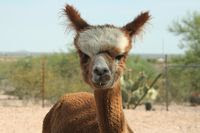
A friend asked me to make a couple of scarves for Christmas presents and I've been thrilled to be able to do this.  We have one gray alpaca - Dude.  He's not the cutest boy in the herd, but I love his coloring.


I finished the first scarf yesterday.  It's the "Misti Chunky Ribs & Ruffles Scarf" pattern.  You can find it free on the internet.  It's a very feminine scarf with pretty ruffles at the edges.  I used size 9 needles and made it according the pattern otherwise.  It came out 3" wide and 81" long.  There's so many cool things you can do with long skinny scarves.  I need to find a mannequin, cause I'm sure not modeling anything!

I'm taking more orders for Christmas, so if you're interested, let me know:  FleeceFurandFeathers@gmail.com.  The gray is all gone now, but I can make any other color or blending of colors that we have in the pasture.  Or if you'd like to do it  yourself, I can provide the yarn.

Saturday, July 10, 2010

Baron and The Rose

I've been busy spinning dog hair again - this time from my nephew dog, Baron.  Baron is a handsome German Shepherd Dog (or a German Shedder, as his mom refers to him).  He's getting up in age and I wanted to give Mary Ann something that she could always have to remember him.  Mary Ann is a crocheter and I believe she's going to make a keepsake pillow with a Shepherd design once she gets enough yarn. 


She sent me about 2 ounces of fur to start with.  I washed it, let it air dry, then ran it through the dryer on the air cycle in a netted laundry bag to remove some of the guard hair.  The more of the prickly guard hair that can be separated from the fluffy fur, the better yarn it will make.  I ran it through my Fancicard to straighten the fibers and remove more guard hair, then started to spin it into yarn.  I was amazed at how nicely it spun up.   Just from looking at it, you wouldn't know it came from a dog.  It has no odor, except maybe a little lavendar scent from the soap I used to clean it.   It's not the softest yarn and you wouldn't want to wear it around your neck, but I think it's a great way to honor a special pet.


The big excitement of my day was the acquisition of a new spinning wheel.  I started to spin last summer on a Majacraft Pioneer.  It's a starter wheel, fairly inexpensive but spins nicely.  My only issue was that it couldn't handle a lot of yarn on the bobbin at one time.  The wheel would quit turning after I got a couple of ounces of yarn plying on it.

I got a Majacraft Rose today from Leef Bloomenstiel at Apple Leef Farm in Van Alstyne TX.  The fluidity of the motion of the wheel is so nice!   And it's a very pretty spinning wheel, too.  The accessories from the Pioneer will work on the Rose and vice versa.  I'll keep the Pioneer for my travel wheel and for demonstrations where people might want to give spinning a try.  Spinning is a great relaxation activity for me and the Rose is going to make it all the better.

Sunday, June 20, 2010

How Our Garden Grows


This was our first full year having a garden here in Texas.  Chet had a small raised garden in Arizona, but nothing planted in the ground.  We had a fairly large area here so he planted a variety of things there to see what would grow. 

The zucchini grew to incredible sizes.  The peppers were perfectly sized for stuffing; tomatoes were nice, but probably not enough of them for Chet.  I asked for lots of onions, which I got - Texas sweet onions, green onions and some Vidalias, too, I think.  He didn't label them, so we're not sure what was planted where. 

The sweet corn and potatoes were disappointments.  The corn was very tasty, but only grew in very small ears.  Too little water, too many bugs??  The potatoes were extremely small - most no bigger than my thumb.  Not sure what happened there.  I know they didn't get in the ground on time because of the snowstorm in February.

We also got some nice green beans and shallots; some great head lettuce that got eaten quickly.  Had to get that harvested before the giant rabbit got it all.


We got lots of garlic, too, which is great because I use it a lot in cooking. We haven't seen any vampires here either, so I know it's working.


Wednesday, June 9, 2010

Critter Update

Our second attempt to hatch eggs under a hen failed as well.  We tried with a different brooding hen, a small Silkie-x, who was a fierce protector of her clutch.  She went for days without getting off the nest to eat or drink.  The problem came when she pooped on the eggs.  They were all covered with poo and were disgusting; too nasty to even try to clean up.  So, no baby chicks this year.


We had 2 of our 3 Silkie girls brooding and when they brood, they don't lay eggs, so aren't contributing to their room and board costs.  We put them on Craig's list and they went home with a guy looking for female companionship for his Silkie rooster.  We went and got 6 new Americaunas (Easter eggers) who lay the green and blue eggs.  They've been great layers so far.  So, the henhouse is full again, but it's been so hot production is down from everyone else.

We also sold 2 of our alpacas to a great lady who does Pyrenees rescue and trains them for livestock guardian work.  We're at 14 alpacas and the llama now.


Our own livestock guardians, Luke and Leia, have been quite a challenge in the last few months.  Between the 2 of them, they've been in trouble for barking at the alpacas, chasing the alpacas, escaping from the yard, and barking at nothing during the night.  Teenagers!!  They'll be a year old on July 1, so I'm hoping they'll settle down soon.


Sunday, May 16, 2010

No Chicks This Time

Our first natural hatch didn't turn out well.  Days 21 and 22 came with no peeps or pips from inside the eggs.  We were down to 8 eggs from the original dozen on hatch day.  Lola had either eaten them or they had exploded and covered the remaining eggs in goo.  A few of the 8 that were left had developed to a certain point, but didn't make it for the duration.

I took Lola out of the brooding box this morning.  She was all wet underneath and the nest was yucky.  Once she got outside, she seemed happy to be relieved of her duties and went around the yard looking for bugs.  She came back later in the day and looked for her nest, but so far no signs of brooding again.  Hopefully she'll get back to laying eggs soon.

Since Lola started brooding a couple months ago, 3 more hens have decided they want to hatch eggs, too.  We're going to try again with another 10 eggs under a little silkie girl tonight.  We're going to move the brooding box inside the barn to be able to keep it completely dry.

Thursday, May 6, 2010

The Wait for Chicks

We tried to candle the dozen eggs that Lola is trying hatch a couple nights ago.  Having never done it before and not wanting to have the eggs away from her for very long, we didn't get a real good idea of how many eggs looked viable.  I could definitely see formations in some of them, but couldn't see anything in the green eggs. 

This morning when I went out to the brooding box to be sure she had food and water, I found one egg outside the nest and it was covered with goo - like she had deliberately removed it from the nest.  (Would a hen do that??)

I lifted Lola up to check on the others and she only had 10 eggs left.  It looks like one of them broke or exploded (which can sometimes happen when the egg isn't fertilized and it's being heated constantly from the hen sitting on it).  It also appears that she ate most of it after it opened up.  There was some pieces of shell leftover. 

The 10 remaining eggs are messy now with whatever came out of the broken egg and I don't know whether they'll be able to survive.  Not sure whether I should try to clean them up or just let nature take its course.  Research time!

Saturday, April 24, 2010

Making Chickens the Old Fashioned Way


One of our pretty Buff Orpington hens, Lola, has a tendency to brood.  A couple times of year, she decides she wants to be a mama and sits on the nesting box for weeks at a time.   We've discouraged that in the past for a number of reasons - we didn't have a reliable rooster around for any length of time, we didn't really want to mess with baby chicks, and we were afraid of getting more roosters.

So, when Lola went broody, we took all the eggs out from under her and encouraged her to get up and move around.  The trouble is that broody hens only have one thing in mind - hatch the eggs to make the babies.  Basically you just have to wait until she gives up and gets over the fact that she's not going to be a mother hen.

This spring, we're in our new place in Texas with more land, lots of pasture and a healthy young rooster, Rocky, who (how can I put this) is very active with the ladies.  It doesn't take long to catch him in the act.  Sorry for the graphic nature of the following photo. 


This poor girl below is one of his favorites.  You can tell by the lack of feathers on her back and shoulders.  I'm thinking about getting her an apron to where so she can heal up.


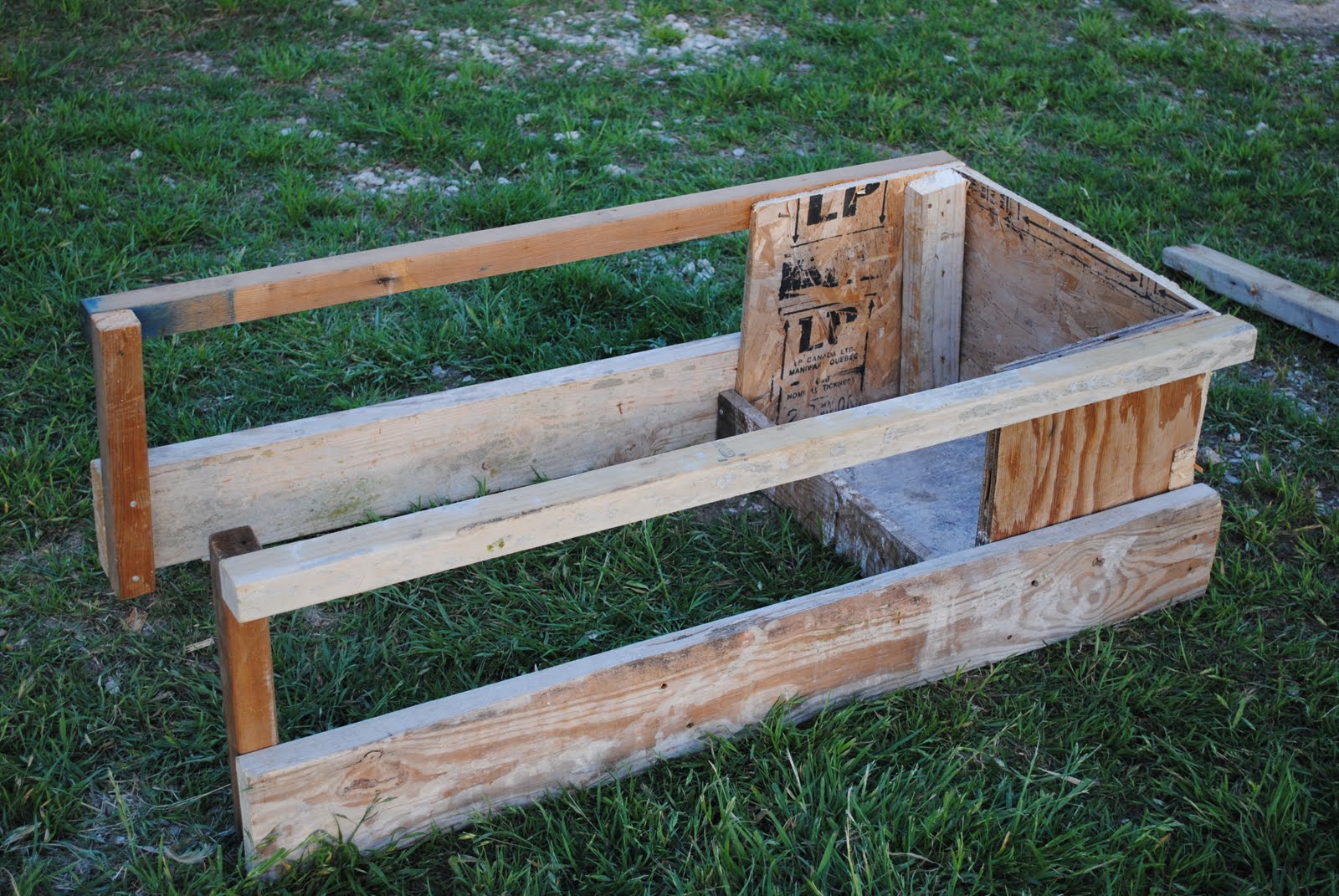
When Lola went broody again last week, Chet talked me into letting her try and hatch some eggs.   I told him he'd have to build her a brooder box so that she can be separated from the others and have a safe place for the chicks to hatch.  He went to work!


He made it up as he went along, but I think it's an excellent design.   He covered it with chicken wire and we put it on the floor of the coop.  I chose 12 eggs for Lola to try and hatch.  From my internet research, I found that you should have as many eggs as the bird can safely keep under her and keep warm.   The eggs should also be well formed and clean.  Since Rocky has been doing his job, I'm hoping most of them will be fertile.  (We'll know more when we candle them in about 10 days.)

We waited until dusk and we put the brooder box in the coop.  I put the eggs in the new hatching nest. 


Lola, of course, was still on the laying nest.  We took her out of there and put her in the brooder box on top of the eggs.   Everything fit very nicely.  Happily, this morning when I went out to check on her and opened the box to give her food and water, she was sitting on all the eggs and didn't even try to get up!  I think that's a good sign that she's going to be OK with the move.


Stay tuned for her progress!  If all goes well, we'll have baby chicks in 21 days.

Leia and the Log

Our Anatolian Shepherd livestock guardian puppies are turning 10 months old.  You'd never know from their size that they are still growing puppies.  Luke is taller than our biggest greyhound now (and Louie's a big boy) and Leia isn't much smaller.  Luke's probably between 90-100 pounds.  He could top out around 120 when he fills outs.

There have been many challenges bringing up puppies with the other farm animals.  The Anatolians live in the barn in their puppy stall with access to an outside secure yard when we're not home.  We've had some brave chickens venture into the puppy area and not all have come out alive.  The pups are definitely getting better as they get older.  They haven't killed a bird in about 4 months.  They can successfully interact gently with the birds now and when we are home, they accompany me to do the chores in the chicken yard. 

Our most recent issue has been Leia chasing the alpacas.  Again, she's never allowed to interact with them unless we're home, but recently she's taken to chasing them (almost like a herding dog would do) and actually tried to wrestle one to the ground in play (like she would with a puppy playmate).  Totally unacceptable behavior for an LGD.  It got to the point where I called the breeder for help in finding a more acceptable home - perhaps with animals with horns that could teach her lesson in polite behavior.  During the conversation, I asked for suggestions and he offered one that I immediately dismissed.  Not sure why at the time - maybe my years as a pet dog trainer focused on positive reinforcement techniques made me think that I'd tried everything possible and that she just wasn't meant to be a livestock guardian.

He recommended attaching a log to her and having her drag it around when she had pasture privileges.  I thought it was a little crazy and possibly even a bit cruel.  But, I saw the point - prevent her from practicing the behavior and teaching her a more acceptable speed at which to move around the alpacas.  I talk to my clients about this all the time - how can you manage the situation so that the dog doesn't rehearse the bad behavior?  We can't keep Leia totally away from the alpacas; she has to learn how to interact and be calm instead of being a pouncing puppy.

Well. the log did the trick.  She wears a front clip harness so that she pulls the weight from her chest, rather than her neck.  The log itself only weighs a few pounds and is attached to the harness with old choke chains that I've been saving for 10 years.  I knew I'd find a good use for them!  She's definitely not entirely happy when it's attached, but if this is the way she has to learn, then so be it.  Otherwise, this is a dog that could be a danger to livestock and might have to be put down.  Here's a photo with her sad "I can't believe you did this to me" face.

Wednesday, April 7, 2010

The "After" Shots

All the alpacas wanted to pose for photos the day after shearing.  Here's a few shots of some of the same animals from the "Before" post on 3/29.

Here are Choco and Chip and Cosmo.  When we got Cosmo, he looked like a giant Poodle.  We'd never seen him without a lot of fleece.


And here's little Frankie.  You can actually see his pretty blue eyes again.


Some of the new boys we just took in didn't have names, just ID numbers.  We named this guy "Bob".  What an unusual face!

The boys seemed proud to show off their new haircuts.  You don't see a lot of gray alpacas and I was tickled to be able to bring this guy home.


So, I've got lots of new fleece now to work with.  I'll be spinning all summer! I'll also probably be selling some. If you're interested, let me know.

Sunday, April 4, 2010

Shearing

Yesterday was co-op shearing day at Patrick's Pastures in Denton.  We took our 16 alpacas for shearing and stayed the day to help with the peripheral duties involved in shearing - handling and moving animals, laying them out for shearing, gathering and bagging fleece, cleaning up after each cutting, etc.  There were a total of 121 animals to be sheared, but unfortunately, not everyone that brought animals was able (or willing) to help out.   We got there at 7 AM and didn't leave until 9 PM.   It was a very tiring and sometimes frustrating day (too many animals and too few people), but overall a good experience - and very educational.


Getting the animal prepped involves putting on leg ties, laying it on the ground and then stretching it out with ropes attached to pullies.  The actual shearing process takes between 3-4 minutes.  I had a break long enough to take some pictures and video (link below).  The red-haired girl in the video, Emma, was my replacement for a while.  (I did this fleece gathering job  for almost 100 animals and my legs and back are pretty sore today.)  The "blanket" comes off the animal first and it's important that it be kept intact as much as possible.  This is the part of the fleece that spinners use to create yarn.  The blanket is kept apart from the rest of the fleece that comes off the legs and neck. 

Alpaca Shearing Video 4/3/10

I'm hoping to get out today and get some photos of our naked alpacas.  They look SO different than they did with all their fleece.